
This website uses cookies so that we can provide you with the best user experience possible. Cookie information is stored in your browser and performs functions such as recognising you when you return to our website and helping our team to understand which sections of the website you find most interesting and useful.
How we eliminated 12 week lead times for a dairy client.
THE CHALLENGE
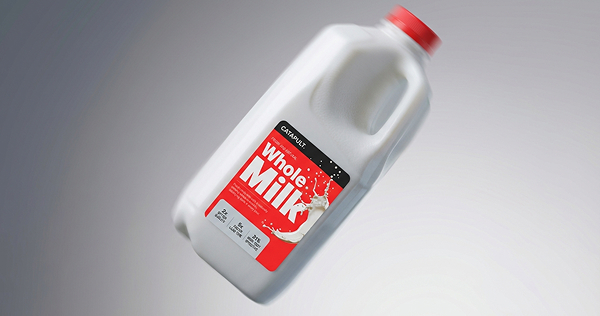
A large dairy producer in Texas was operating with lead times of up to twelve weeks. We reduced this to five days.
In a fast-moving, perishable category, that level of delay created pressure across production, inventory, and planning. Flexibility was limited, and stock had to be held as a buffer against uncertainty.
OUR SOLUTION
We restructured how labels were delivered into their operation. Instead of planning 12 weeks in advance, they now operate on a monthly ordering cycle, with the flexibility to place urgent or short-notice jobs when needed.
That shift is built into how we run. An 80/20 model, where the majority of work is planned, and a proportion is designed to respond to real-time demand.
Lead times were reduced to under five days, but the impact went further than print.
Working closely with their team, we supported the introduction of a new applicator to increase line speeds and support future growth. This wasn’t just an upgrade in equipment. It was a step change in how their operation performs day to day.
Our VMI model added another layer of control. Orders are easier to manage, admin is reduced, and by utilising our storage facility, they’ve been able to increase available capacity without holding additional stock on site.
This partnership wasn’t just about supply. It was about building a model that could respond at the pace their operation demands.
THE OUTCOME
• Shift from long-range forecasting to a more responsive monthly ordering model
• Ability to fulfil urgent and short-notice jobs without disrupting production
• Increased line efficiency through new applicator and faster internal processes
• Reduced reliance on holding excess inventory, supported by VMI and off-site storage
• A more responsive, controlled supply chain built around real-time demand
WHAT THEY SAID
“The service is second to none and Catapult continually overdeliver on how we can help. Catapult has allowed us to carry less inventory as we know they will always deliver for us.”
When lead times drop, everything changes. Less stock. Less risk. More control. And a model that can respond when it needs to. That’s what happens when your supply chain is built properly.